PROJECTS/CLIFF EDGE PROJECT/Memories of Tanna/2014

PROJECTS/CLIFF EDGE PROJECT/丹那の記憶/2014

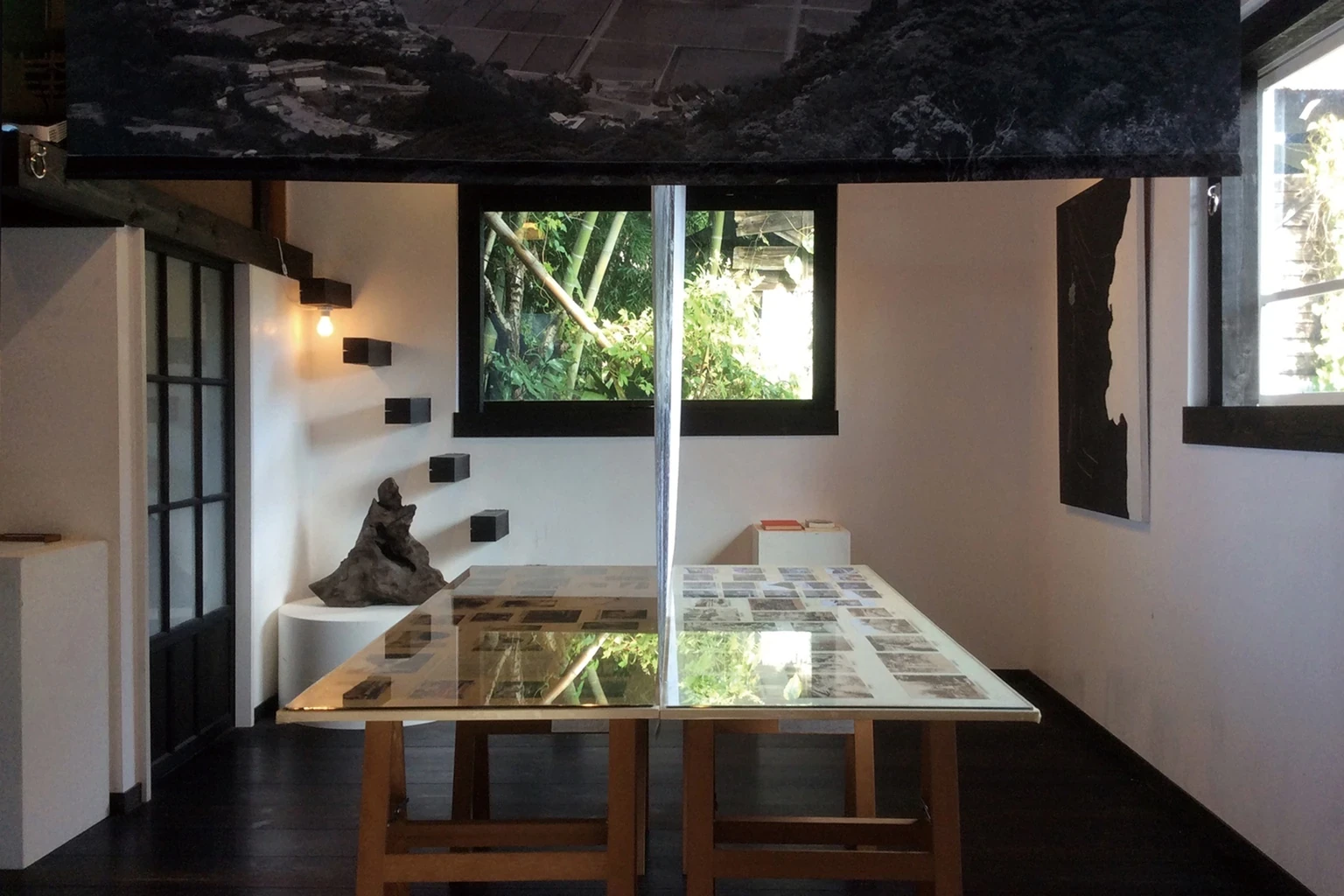
Installation view of Memories of Tanna at KURUBUSHI-BASE, 2014
Installation view of Memories of Tanna — KURUBUSHI-BASE, Tanna, Kannami — 2014
《丹那の記憶》展示風景 KURUBUSHI-BASE/静岡県函南町丹那 2014
CLIFF EDGE PROJECT MEMORIES OF TANNA 2014
CLIFF EDGE PROJECT 丹那の記憶 2014

PROJECT INFORMATION

Year
2014
Dates
October 5 – 12, 2014
Location
Tanna, Kannami, Shizuoka, Japan
Venue
KURUBUSHI-BASE
Role
Planning; artwork production and exhibition direction

PROJECT INFORMATION

開催年
2014
会期
2014年10月5日 – 10月12日
地域
静岡県田方郡函南町丹那
会場
KURUBUSHI-BASE
役割
企画、作品制作、展示構成
公式サイト
公式サイト ↗

CONCEPT / ROLE

Memories of Tanna (2014), the first exhibition of the Cliff Edge Project, was held in the Tanna Basin. Through paintings, photographs, video, and collected materials, it addressed the Tanna Fault, the 1930 North Izu Earthquake, and the construction of the Tanna Tunnel underway directly beneath the basin. My relationships with friends living in Tanna and walking through the basin became the starting points for the research.

The exhibition brought together panoramic photographs of the basin, contour maps, records of fault displacement, interviews with earthquake survivors, archival photographs of the disaster and tunnel construction, a photographic map made through street observation, as well as jindai-sugi cedar and a wall clock from the Tanna Water Shortage Countermeasures Committee—materials carrying the history of life in the area. Here, a method took concrete form: walking the land, studying documents, listening to people, and allowing work to emerge from those encounters.

Decisive within this research was my encounter with the “fault mirror,” a phenomenon in which bedrock surfaces rub against one another during fault movement and become smooth like a mirror. Having worked with mirrors and mirror surfaces since my student years as devices that destabilize perception, I experienced this as the moment when the problem of the human-made mirror connected to geological time. The minimal wall I had initially conceived was also reconfigured through encounters with the fault, earthquake, tunnel, water shortages, and local testimony. Here, the order of making shifted—from bringing a work into a place to allowing the work itself to be transformed by the land.
CONCEPT / ROLE

《丹那の記憶》(2014年)は、Cliff Edge Project最初の展覧会として丹那盆地で開催した。絵画、写真、映像、収集資料によって、丹那断層、1930年の北伊豆地震、盆地直下で進められた丹那トンネル工事を扱った。丹那に暮らす友人との関わりと、盆地を歩くことが調査の起点となった。

展示には盆地の全景写真、等高線の地図、断層変位、地震体験者への聞き取り、震災・トンネル工事の記録写真、路上観察の写真地図に加え、神代杉や丹那渇水対策委員会の柱時計など、土地の生活史を伝える資料を配置した。土地を歩き、資料を調べ、人の話を聞き、そこから作品を立ち上げる方法がここで具体化した。

調査のなかで決定的だったのが「断層鏡面」との出会いだった。断層運動によって岩盤同士が擦れ合い、表面が鏡のように滑らかになる現象である。学生時代から鏡や鏡面を知覚を揺るがす装置として扱ってきた私にとって、それは人間がつくる鏡の問題が地質的時間へ接続された瞬間だった。当初構想していたミニマルな壁も、断層、地震、トンネル、渇水、地域の証言に触れるなかで組み替えられていった。ここで制作の順序は、作品を場所へ持ち込むことから、土地によって作品そのものが変えられていくことへ転換した。

RELATED PROGRAM

Talking about Memories of Tanna

October 11, 2014 / Keigetsuzan Chokoji Temple

Part 1 — “Remembering the North Izu Earthquake”: Isao Aizawa, Miyoko Ishikawa / Interviewer: Ninsho Kakinuma

Part 2 — “What Can We Communicate from Izu”: Eiji Kobayashi, Kosuke Harada, Rieko Matsushita / Moderator: Maki Sumi

RELATED PROGRAM

「丹那の記憶を語る」

2014年10月11日 / 渓月山 長光寺

第一部「北伊豆地震を語る」 相澤功、石川美代子 / 聞き手:柿沼忍昭

第二部「わたしたちは伊豆から何を発信できるか」 小林英治、原田康補、松下理恵子 / 司会:住麻紀

PROJECT CREDITS

Organizer
Cliff Edge Project Executive Committee
Endorsed by
Kannami Town Board of Education
Cooperation
Keigetsuzan Chokoji Temple
Planning
Kohei Sumi
Production
Rieko Uchino (photography) / Takashi Endo, Shora Kato (display) / KURUBUSHI-WORKS — Kosuke Harada + Terumasa Seto (video)

PROJECT CREDITS

主催
Cliff Edge Project 実行委員会
後援
函南町教育委員会
協力
渓月山 長光寺
企画
住康平
制作
内野利江子(写真) / 遠藤高史・加藤翔麗(ディスプレイ) / KURUBUSHI-WORKS(原田康補+瀬戸照済/映像)